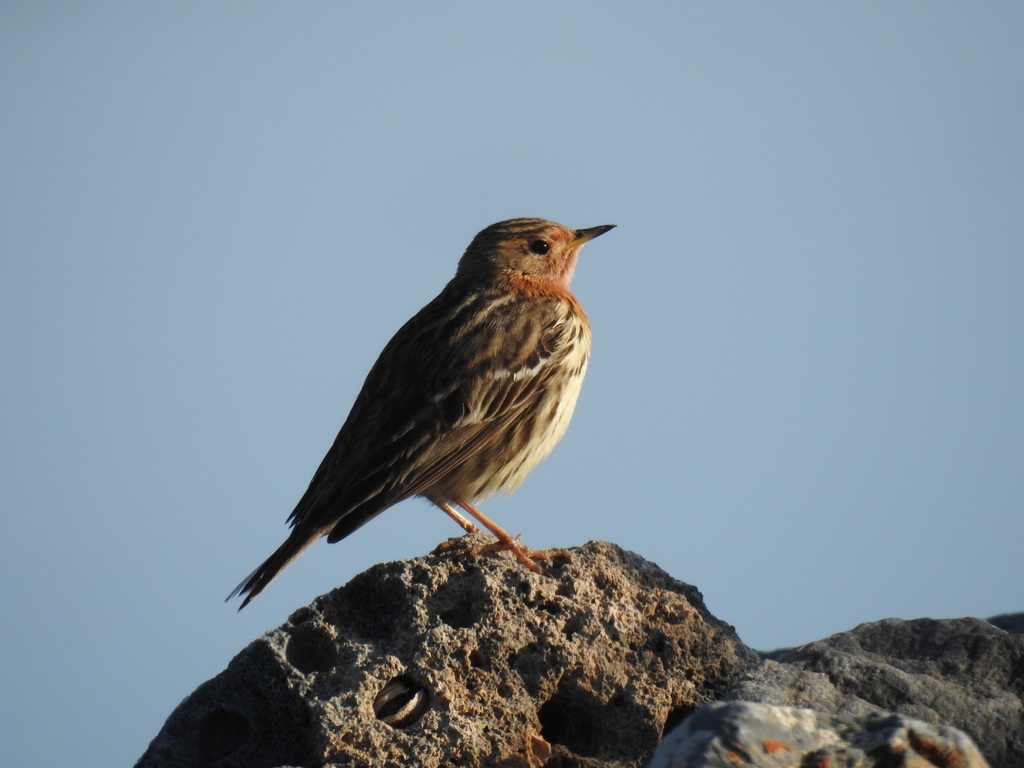
Red-throated Pipit
The red-throated pipit (Anthus cervinus) is a small passerine bird, which breeds in the far north of Europe and the Palearctic, with a foothold in northern Alaska. It is a long-distance migrant, wintering to Africa and South-East Asia and western Alaska in North America. It is vagrant to Western Europe.
In Türkiye
Arrives in autumn and leaves in spring; summer records are almost absent.
Most records in April and October.
Provinces where it makes up the largest share of bird records.
Adjusted for how many birdwatchers are out each month; the busiest month = 100%.
3,283 records from Türkiye · #209 of 634 species by number of records. Source: GBIF.org (October 2026). All birds of Türkiye
About
The scientific name is from Latin. The generic name Anthus is the name for a small bird of grasslands, and the specific
name cervinus means "stag-coloured", from cervus, "stag".
This is a small pipit, with an adult easily identified in the breeding season by its brick-red face and throat. In other plumages, this is an undistinguished-looking species, heavily streaked brown above, with whitish mantle stripes, and with black markings on a white background below. It is very similar in appearance to the meadow pipit, and in the autumn, it much resembles the tree pipit, but has an altogether more striped appearance because of the larger numbers of streaks on the cap, back, flank, rump, and chest. The flight of the red-throated pipit is strong and direct, and it gives a characteristic psii call as it flies.
Text from Wikipedia (CC BY-SA 4.0)
At a glance
In breeding plumage its face and throat are brick-red; it breeds on Arctic tundra and passes through Turkey.
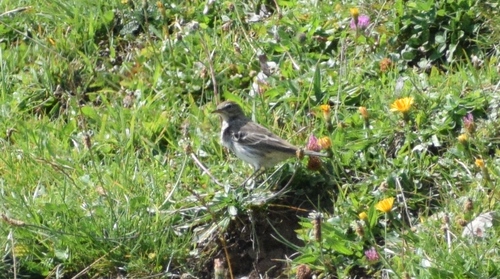
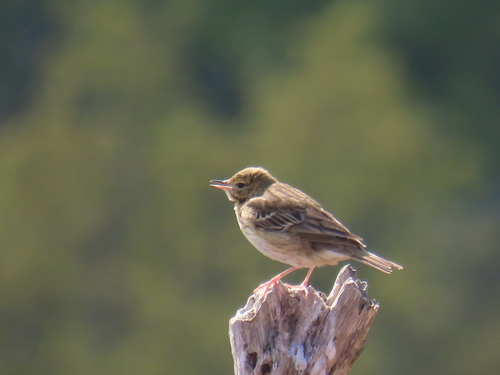
Similar birds
All birds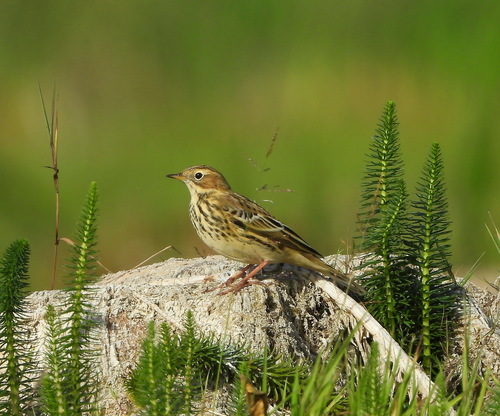

Heard this one in the wild?
Record it and Birdy will confirm — then it's in your journal.