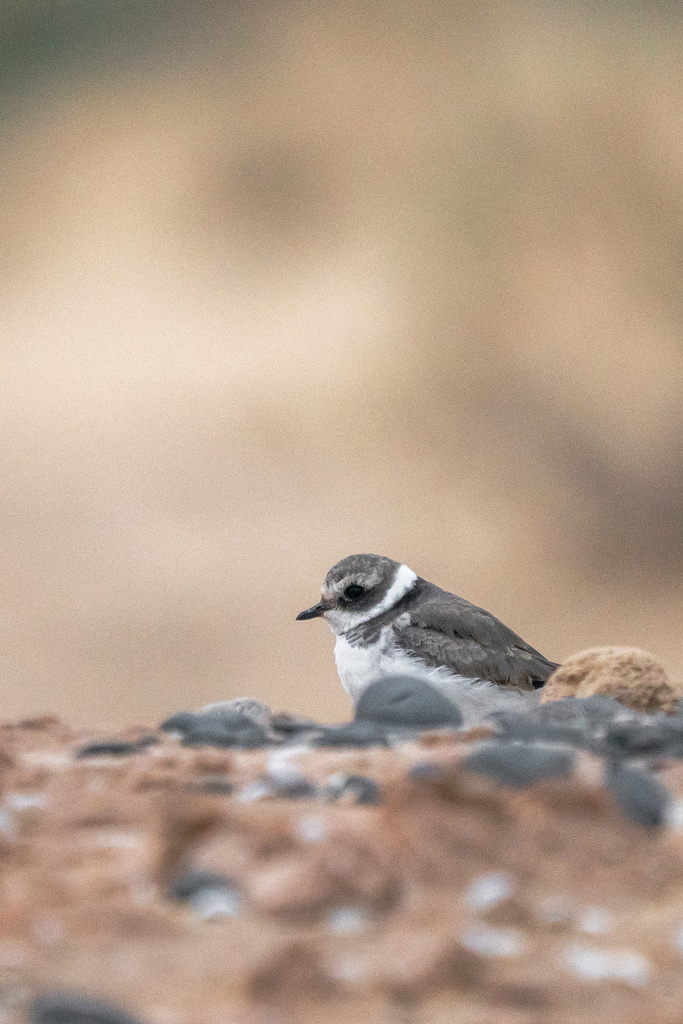
Common Ringed Plover
The common ringed plover, great ringed plover or ringed plover (Charadrius hiaticula) is a species of bird in the family Charadriidae. It breeds across much of northern Eurasia, as well as Greenland.
In Türkiye
Arrives in autumn and leaves in spring; summer records are almost absent.
Most records in September.
Provinces where it makes up the largest share of bird records.
Adjusted for how many birdwatchers are out each month; the busiest month = 100%.
5,799 records from Türkiye · #155 of 634 species by number of records. Source: GBIF.org (October 2026). All birds of Türkiye
About
The common ringed plover was formally described in 1758 by the Swedish naturalist Carl Linnaeus in the tenth edition of his Systema Naturae under the current binomial name Charadrius hiaticula. Linnaeus specified the type locality as "Europa & America" but this is now restricted to Sweden. The specific epithet hiaticula is late Medieval Latin for a plover.
Three subspecies are recognised:
C. h. psammodromus Salomonsen, 1930 – Arctic of North Atlantic: Ellesmere Island and Baffin Island (northeast Canada, sporadic); Greenland, Iceland, Faroe Islands and Svalbard (north of Norway)
C. h. hiaticula Linnaeus, 1758 – temperate east North Atlantic region: British Isles and northwest France to south Scandinavia and Baltic States
C. h. tundrae (Lowe, 1915) – Arctic Ocean coasts, islands: north Scandinavia to Chukchi Peninsula (northeast Siberia) including Novaya Zemlya and New Siberian Islands (north of northwest, northeast Russia) and St.
Text from Wikipedia (CC BY-SA 4.0)
At a glance
The ringed plover is told by its single black breast band and lures predators from its nest with a broken-wing display.
Similar birds
All birds


Heard this one in the wild?
Record it and Birdy will confirm — then it's in your journal.