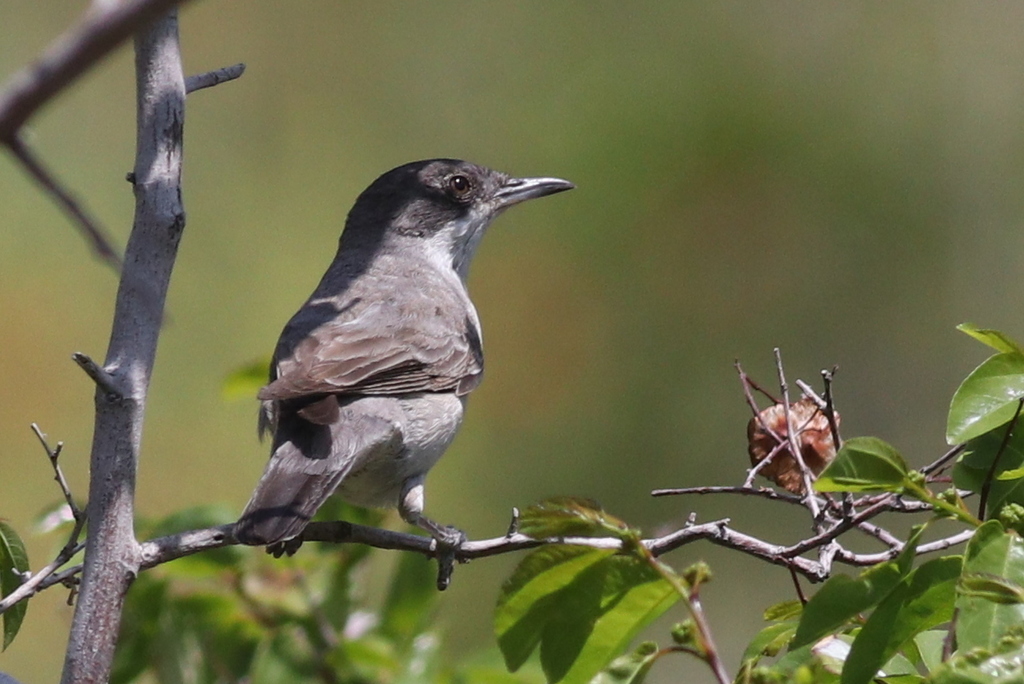
Eastern Orphean Warbler
The eastern Orphean warbler (Curruca crassirostris) is an Old World warbler of the genus Curruca. This species occurs in summer around the Mediterranean, through the Balkans via Turkey, the Caucasus and surrounding regions to Central Asia. It is migratory, wintering in sub-Saharan Africa.
Hear it on xeno-canto Community recordings — opens xeno-canto →In Türkiye
Arrives in spring and leaves in autumn; winter records are almost absent.
Most records in April–June.
Provinces where it makes up the largest share of bird records.
Adjusted for how many birdwatchers are out each month; the busiest month = 100%.
2,511 records from Türkiye · #236 of 634 species by number of records. Source: GBIF.org (October 2026). All birds of Türkiye
About
At 15–16 cm length—somewhat larger than a blackcap—this is one of the largest species of typical warblers. The adult males have a plain grey back. The bill is long and pointed and the legs black. The male has a dark grey head, black eye mask, and white throat. The iris is white. Females and immatures have a paler head and reddish underparts; their grey back has a brownish tinge. The iris is dark in young birds. It is difficult to visually distinguish from the Western Orphean warbler.
The song is a series of warbling liroo-liroo and scolding notes. Its song is more varied than that of the western Orphean warbler, approaching the Nightingale in richness.
These small passerine birds are found in open deciduous woodland. 4–6 eggs are laid in a nest in a bush or tree. Like most "warblers", the eastern Orphean warbler is a nectarivore.
Text from Wikipedia (CC BY-SA 4.0)
At a glance
A large warbler whose pale eye stands out on its dark head, singing loudly in warm oak woods and orchards.
Similar birds
All birds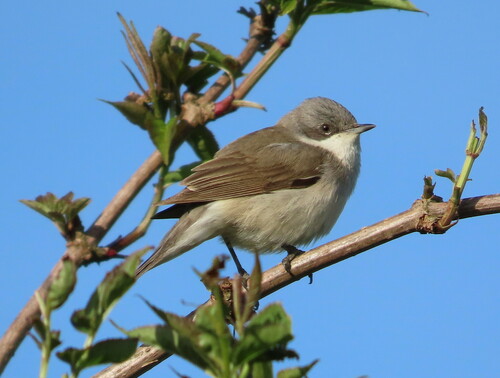


Heard this one in the wild?
Record it and Birdy will confirm — then it's in your journal.