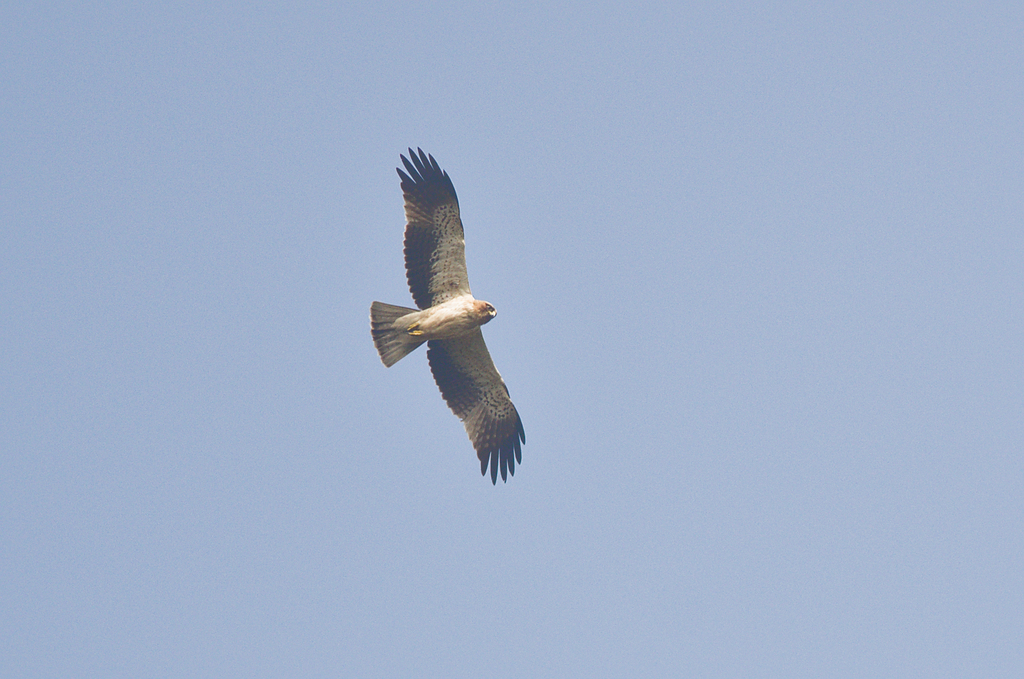
Booted Eagle
The booted eagle (Hieraaetus pennatus) is a medium-sized mostly migratory bird of prey with a wide distribution in the Palearctic and southern Asia, wintering in the tropics of Africa and Asia, with a small, disjunct breeding population in south-western Africa. Like all eagles, it belongs to the family Accipitridae.
In Türkiye
Arrives in spring and leaves in autumn; winter records are almost absent.
Most records in September.
Provinces where it makes up the largest share of bird records.
Adjusted for how many birdwatchers are out each month; the busiest month = 100%.
5,277 records from Türkiye · #167 of 634 species by number of records. Source: GBIF.org (October 2026). All birds of Türkiye
About
The booted eagle was formally described in 1788 by the German naturalist Johann Friedrich Gmelin in his revised and expanded edition of Carl Linnaeus's Systema Naturae. He placed it with the eagle, falcons and relatives in the genus Falco and coined the binomial name Falco pennatus. Gmelin based his description on "Le Faucon Patu" or "Falco pedibus pennatis" that had been described and illustrated in 1760 by the French zoologist Mathurin Jacques Brisson. Brisson had examined a specimen in the collection of Madame de Bandeville who was also known as Marie Anne Catherine Bigot de Graveron (1709-1787). The booted eagle is now placed in the genus Hieraaetus that was introduced in 1844 by the German naturalist Johann Jakob Kaup. The genus name combines the Ancient Greek hierax meaning "hawk" with aetos meaning "eagle".
Text from Wikipedia (CC BY-SA 4.0)
At a glance
The booted eagle is a small, buzzard-sized eagle that occurs in two colour forms, pale and dark.
Similar birds
All birds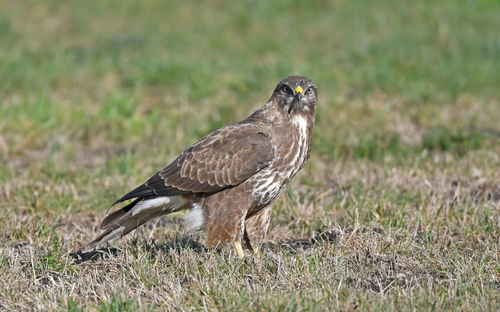


Heard this one in the wild?
Record it and Birdy will confirm — then it's in your journal.