
Armenian Gull
The Armenian gull (Larus armenicus) is a large gull found in the Caucasus and the Middle East. It was formerly classified as a subspecies of the European herring gull (L. argentatus), but is now generally considered to be a separate species, although BirdLife International lumps it with the yellow-legged gull (L. michahellis).
Hear it on xeno-canto Community recordings — opens xeno-canto →In Türkiye
Recorded in Türkiye throughout the year.
Most records in September–December.
Provinces where it makes up the largest share of bird records.
Adjusted for how many birdwatchers are out each month; the busiest month = 100%.
17,510 records from Türkiye · #56 of 634 species by number of records. Source: GBIF.org (October 2026). All birds of Türkiye
About
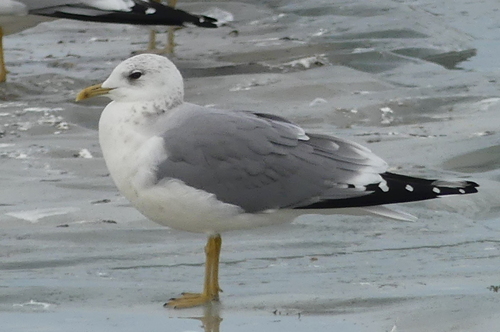
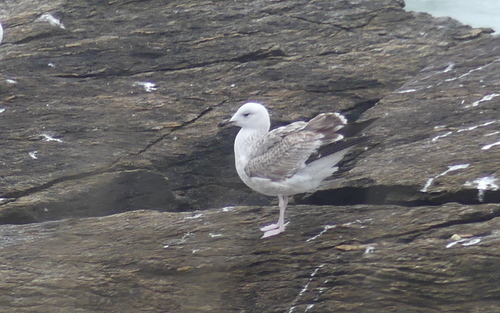
The Armenian gull is a fairly large gull species, though it is on average the smallest of the "herring gull" complex. It can range from 52 to 62 cm (20 to 24 in), from 120 to 145 cm (47 to 57 in) across the wings, and weighs from 600 to 960 g (1.32 to 2.12 lb). Among standard measurements, its wing chord is 38.5 to 45.8 cm (15.2 to 18.0 in), its bill is 4.1 to 5.6 cm (1.6 to 2.2 in) and its tarsus is 5.7 to 6.4 cm (2.2 to 2.5 in). They are superficially similar to yellow-legged gulls but are slightly smaller with a slightly darker grey back and dark eyes. The area of black on the wingtips is more extensive with smaller white spots. The bill is short with a distinctive black band just before the tip. First-winter birds are mainly brown.
Text from Wikipedia (CC BY-SA 4.0)
At a glance
The Armenian gull is a narrowly distributed gull breeding on the high lakes of eastern Anatolia, especially Lake Van.
Similar birds
All birds

Heard this one in the wild?
Record it and Birdy will confirm — then it's in your journal.